PROFUMOIR, FLORENCE, photos credited to Nicola Burazzi
An olfactory voyage between emotions and memories
Essential and enlightening, our sense of smell is known to connect directly with the areas of the brain dedicated to memory and emotions. Thus, perfumery differs from almost any other art form, naturally operating on a deeper level.
Profumoir works on this instinctive and experimental level.
Olfactory renaissance: perfumoir and the essences of the florentine tradition
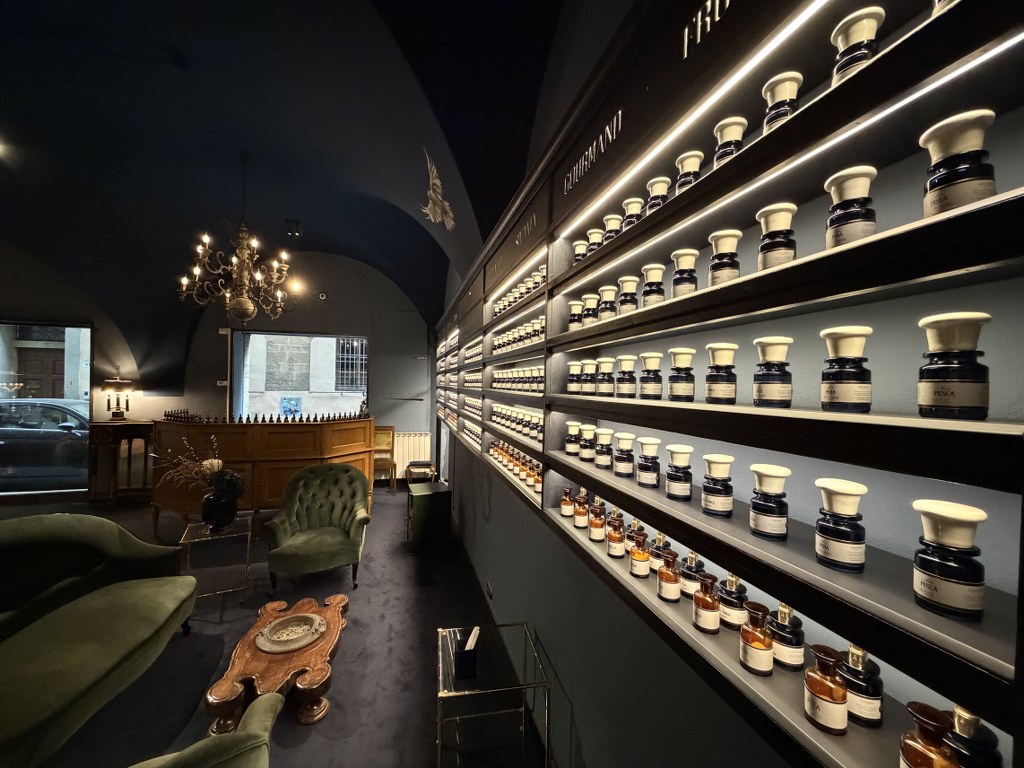
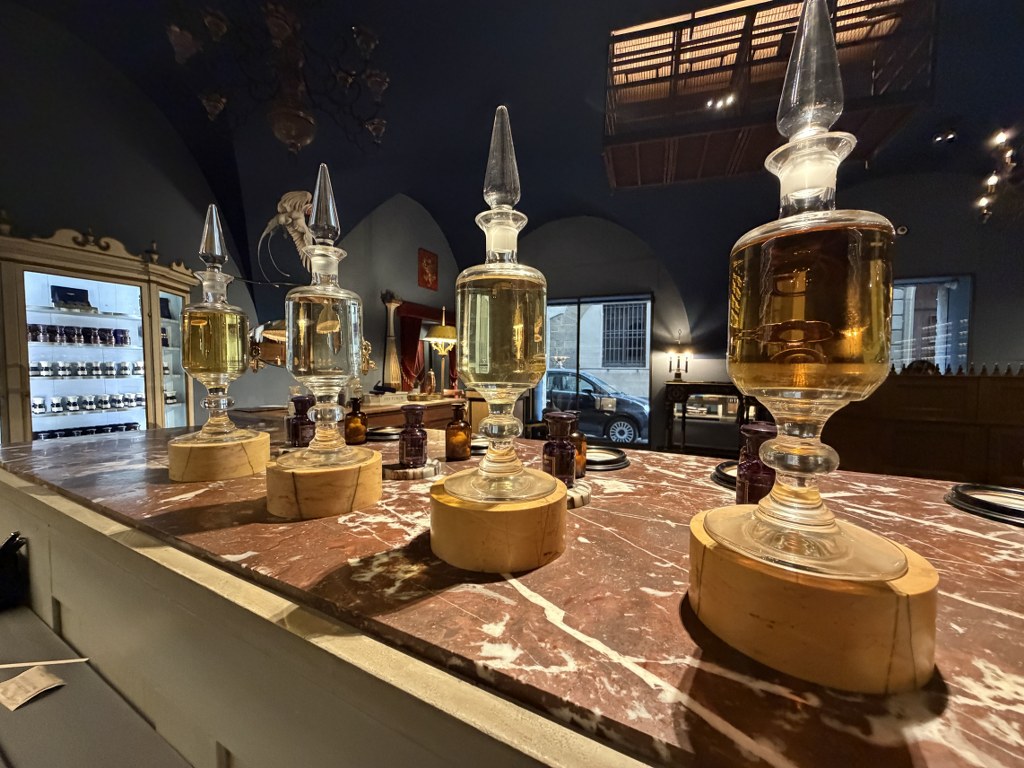
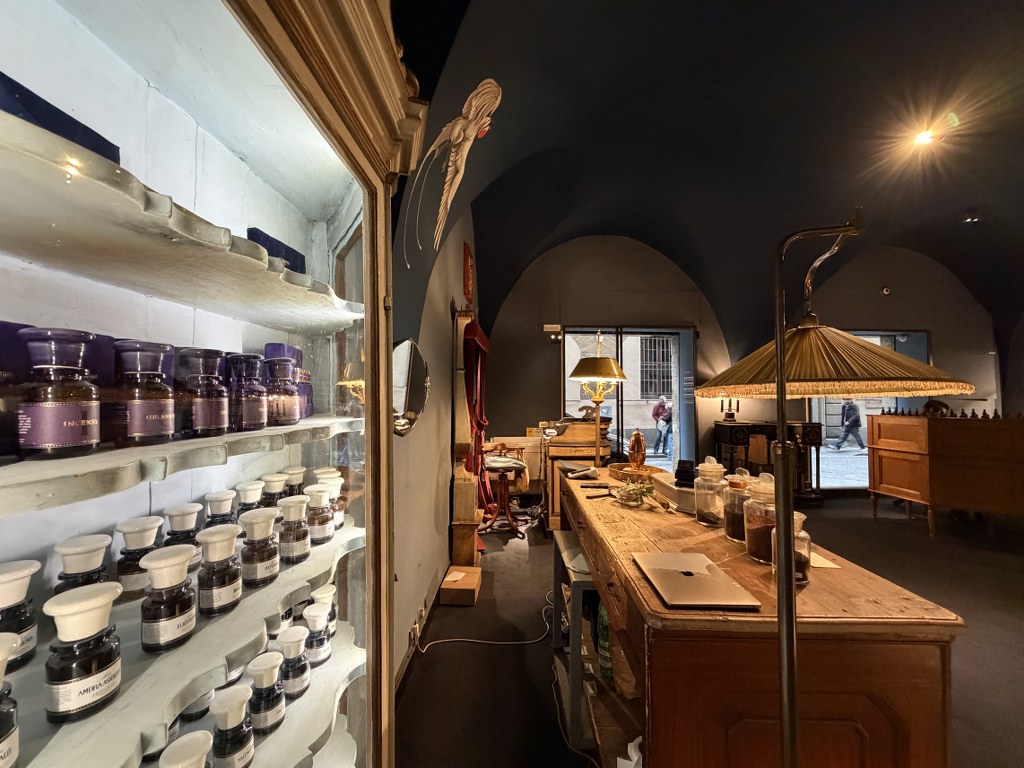
Nestled in the Florentine setting of San Niccolò district, a few steps from Piazzale Michelangelo and the Rose Garden, Profumoir’s laboratory recalls the artistic heritage infused in the city. Within the walls of this place, one can sense the ode to Florentine symbolism, to artisan skills and to the eternal language of the Renaissance, as it lives and resonates.
Driven by the desire to celebrate the alchemical soul of Florence and the artistic expression of high perfumery, Profumoir aims to restore the meaningful value of each raw material. By following extraction techniques that encompass tradition and innovation, and enriching it through layering, Profumoir brings the possibilities of customization to the fore.
The florentine monks, the medici family and the alchemical approach to nature.
More than any other sense, smell responds to an innate and instinctive need.
Since ancient times, man has always interacted with nature to take maximum advantage and enhance its fruits.
Studying and refining the techniques for relating to nature, the alchemist monks of Florence deepened the study of spagyric medicines and extraction techniques, followed by illustrious thinkers, including Leonardo da Vinci, who conducted experiments to extract dyes, perfumes, oils and poisons from plants and flowers.
Alchemy, plants and perfumes: the medici herbalist's shop in florence
Synchronized with astrology, the alchemical work has brought to light countless beneficial properties of plants, establishing precious connections between body, soul and cosmos. Within the city of Florence, this wealth of scientific and holistic knowledge quickly became the main treasure of the powerful Medici family, who continued to expand it, using the benefits of natural essences, inserting them into everyday city life and developing the first notions of high perfumery. Patrons of the arts, the Medici contributed to fueling a whole explosion of artistic, scientific and cultural progress, which in turn accelerated the study and evolution of the art of perfumery.
The intriguing art of perfumery, from florence to france
From the botanical representations in paintings to those expressed in the meticulous Italian gardens, including the famous Boboli Gardens, plant life in Florence extended beyond medicinal purposes and became synonymous with opulence, style and intrigue.
Like any other art, perfumery was not exempt from the duality of nature. It was said that Renato Bianco, personal perfumer of Caterina de' Medici's entourage, invented perfumes as well as poisons, simply by using his mastery in managing doses, as theorized by the Swiss alchemist and physicians Paracelsus.
The alchemical heritage of florence
By subverting the rules of perfumery and transforming nature, Florence's influence laid the foundations of a seductive and cutting-edge art, which led France to earn recognition as the homeland of perfume.
In honor of this timeless art, which has extended from the Renaissance to the present day, Profumoir aims to pay homage both to the alchemical methods of extraction and to perfumery in its highest symbolic expression.
A journey among notes and emotions: the experiential perfumery in florence
Here, experience becomes crucial through products, immersive multisensory events and interactive education based on personal experimentation.
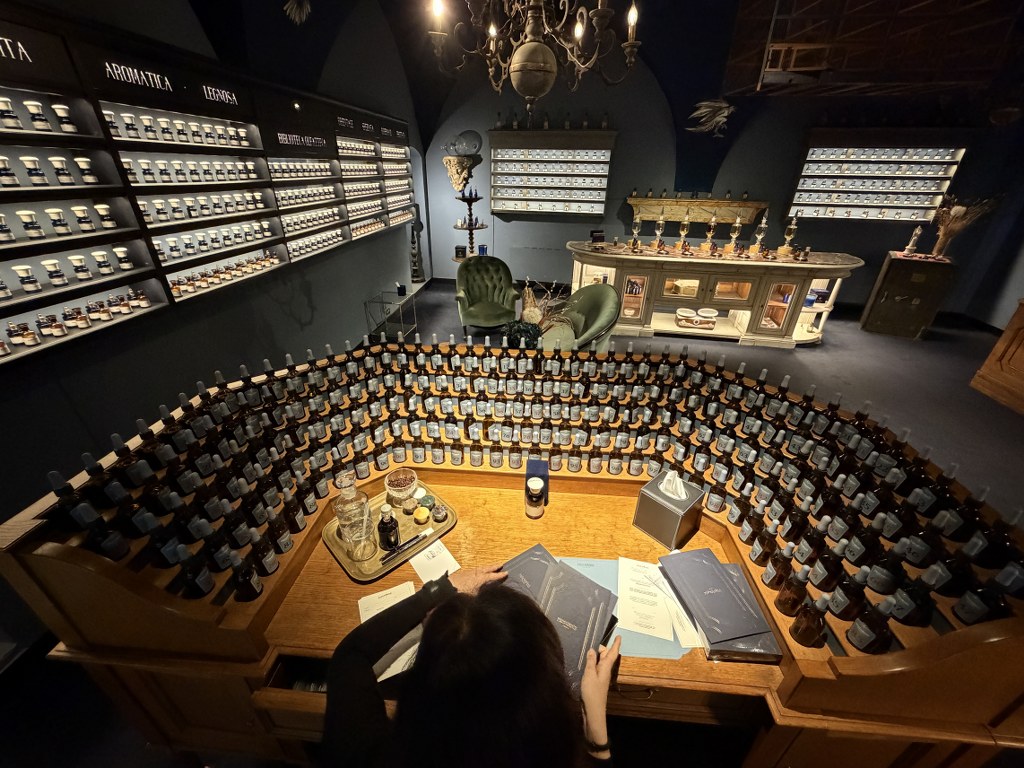
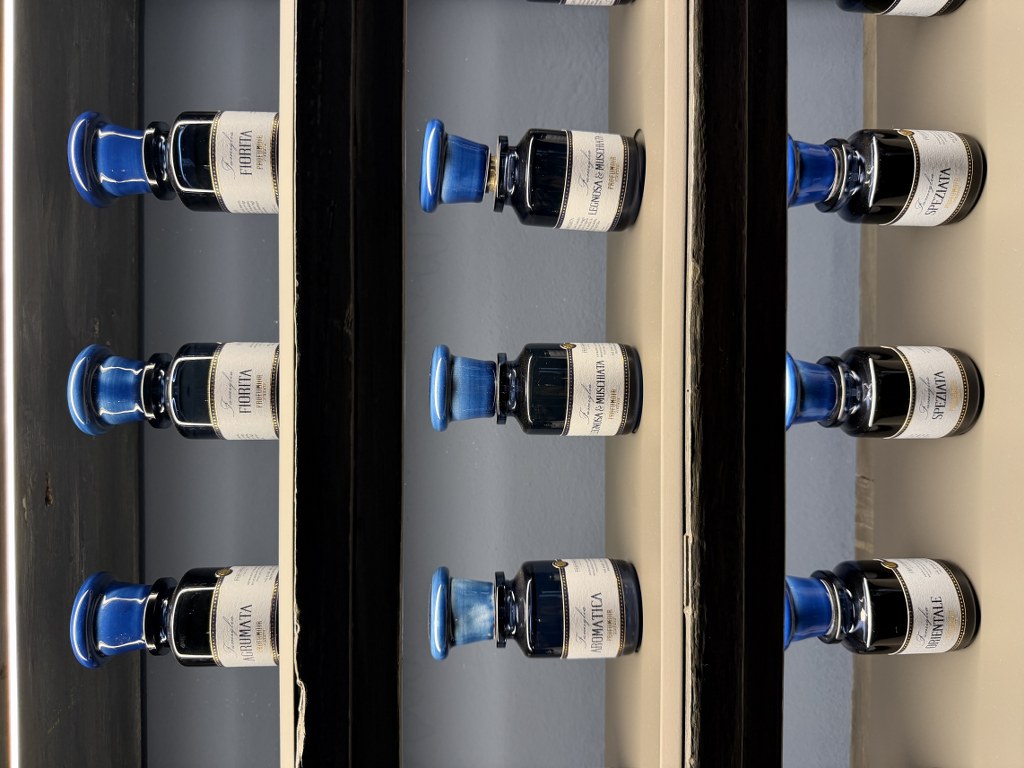
Thanks to an olfactory library in continuous development, and an Olfactory Organ that guarantees exclusive access to 198 notes carefully selected by Master Perfumer Sileno Cheloni, Profumoir lives perfumery with a pioneering spirit.
A true multi-sensory invitation to embrace your instincts and innate creativity, by surrendering to the language of raw materials. An encouragement to learn the basics of extraction and to discover the olfactory families and their interaction with the chemistry of one's own skin, to create one of a kind synergies.
The art of layering
Through the art of layering, customers gradually layers and transforms their favorite notes into new fragrances, blending complementary or contrasting essences.
The layering process in fact allows you to vary your reference tones, translating the mood or atmosphere of any given moment into an intimate, personal and extraordinary product.
An authentic celebration of the cathartic value of perfumery.