A Four-Day Journey Through Sicily: History, Heat, and Timeless Beauty
Sicily had been a long-awaited destination, the kind of trip you imagine for years before finally turning it into reality. Four days were enough to fall deeply under its spell, yet just short enough to leave a lingering sense of longing.
Our journey began in Florence and ended in Catania, where the landscape immediately shifted — brighter light, stronger colours, and a slower, warmer rhythm of life.
The first night was spent in Taormina, an extraordinary town perched above the Ionian Sea.
Rich in history and tradition, Taormina feels suspended between eras.
Although a labor union assembly prevented a visit to the famous Greek Theatre, the town still revealed itself through sweeping sea views, elegant streets, vibrant colours, and unexpected winter blooms.
Particularly memorable were the Trevelyan Gardens, created by an English noblewoman who settled in Taormina in 1884 — an enduring reminder of Sicily’s long relationship with Northern Europe.
The second day took us to Mount Etna, Europe’s most active volcano. Driving alongside hardened lava flows was both humbling and awe - inspiring, a stark reminder of nature’s power.
From there, we ventured inland through endless orange groves, passing landscapes made famous by The Godfather and small towns marked by Spanish-influenced architecture.
This quieter side of Sicily felt authentic and deeply rooted, far from mass tourism.
Our next stop was Noto, a jewel of Sicilian Baroque. The town unfolds along a grand main street lined with honey-coloured stone buildings, each more elegant than the last.
Noto is not just beautiful — it’s alive. Music filled the air, events animated the streets, and locals gathered in a way that felt natural and welcoming. It’s a place where history isn’t preserved behind glass; it’s lived every day.
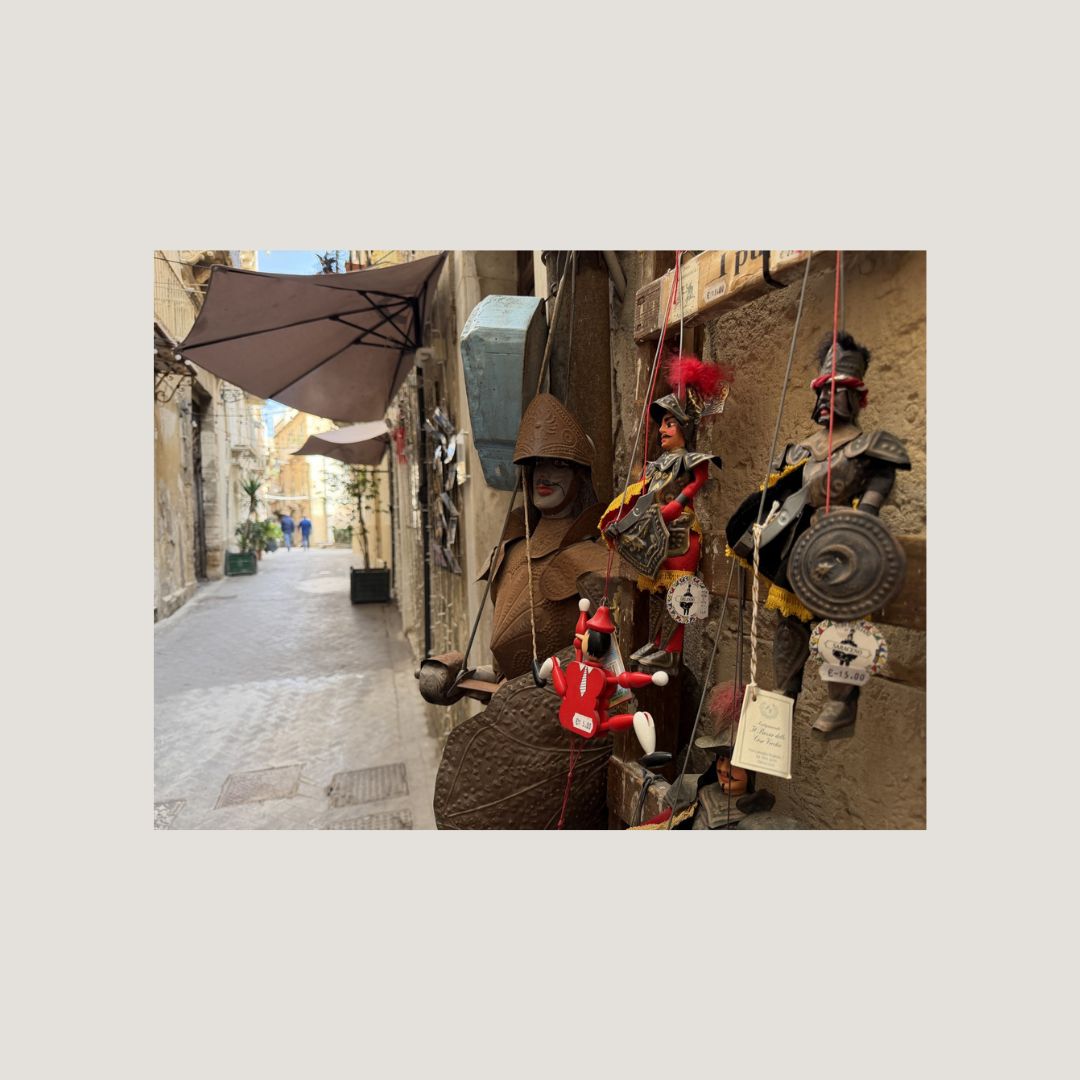
The final destination was Ortigia, the historic heart of Syracuse, where we stayed for two unforgettable days. Here, daily life and beauty coexist effortlessly.
Festive light installations were being assembled on wooden frames, while people swam in city beaches just steps from ancient ruins.
Baroque façades, sun-filled squares, narrow streets, and the atmospheric Jewish Quarter all contributed to a deeply immersive experience.
Cafés spilled into the main piazzas, offering perfect spots to pause with an espresso or a glass of wine.
Food played a central role, as it always does in Sicily. Chocolate pastries made with Modica chocolate, pistachio-filled cornetti from Bronte,
and countless small tastes along the way added layers of pleasure to the journey. Yet beyond the flavours, what lingered most was the human warmth: conversations about history, quiet moments watching fishermen at work, observing daily rituals without fully understanding the language—and realizing that words were often unnecessary.
Sicily is a land shaped by centuries of conquest and coexistence. Greeks, Romans, Arabs, Normans, Spaniards—all have left visible marks, creating a unique cultural mosaic unlike anywhere else in Europe. This layered identity is what makes Sicily so compelling, especially for travelers from the U.S. and Northern Europe seeking depth, authenticity, and a sense of place.
Easily reachable from central Italy—via Perugia, for example—Sicily is remarkably accessible. To truly appreciate it, plan at least three days, ideally during the low season, when the crowds thin out and the island reveals its most genuine self.
Sicily doesn’t simply welcome you—it stays with you.
.jpeg)
.jpeg)
.jpeg)
.jpeg)
.jpeg)
.jpeg)
.jpeg)
.jpeg)
.jpeg)
.jpeg)
.jpeg)
.jpeg)
.jpeg)
.jpeg)
.jpeg)
.jpeg)
.jpeg)
.jpeg)
.jpeg)
.jpeg)
.jpeg)
.jpeg)
.jpeg)
.jpeg)
.jpeg)