ARCHIDADO: A MEDIEVAL TRADITION BROUGHT BACK TO LIFE
Historical origins
The roots of the Archidado go back to the Middle Ages, with its official institution in 1397. The event commemorates the wedding of Francesco Casali, lord of Cortona, and Antonia Salimbeni, a noblewoman from Siena. This marriage was a major political and social event for central Italy, attended by nobles from cities like Florence and Rimini, accompanied by elaborate celebrations, gifts, music, and tournaments. Even earlier traditions also feed into the festival. Religious ceremonies such as the “Offerta dei Ceri” (offering of candles) date back to 1325, showing how civic and religious life were closely intertwined in medieval Cortona.
Revival and modern form
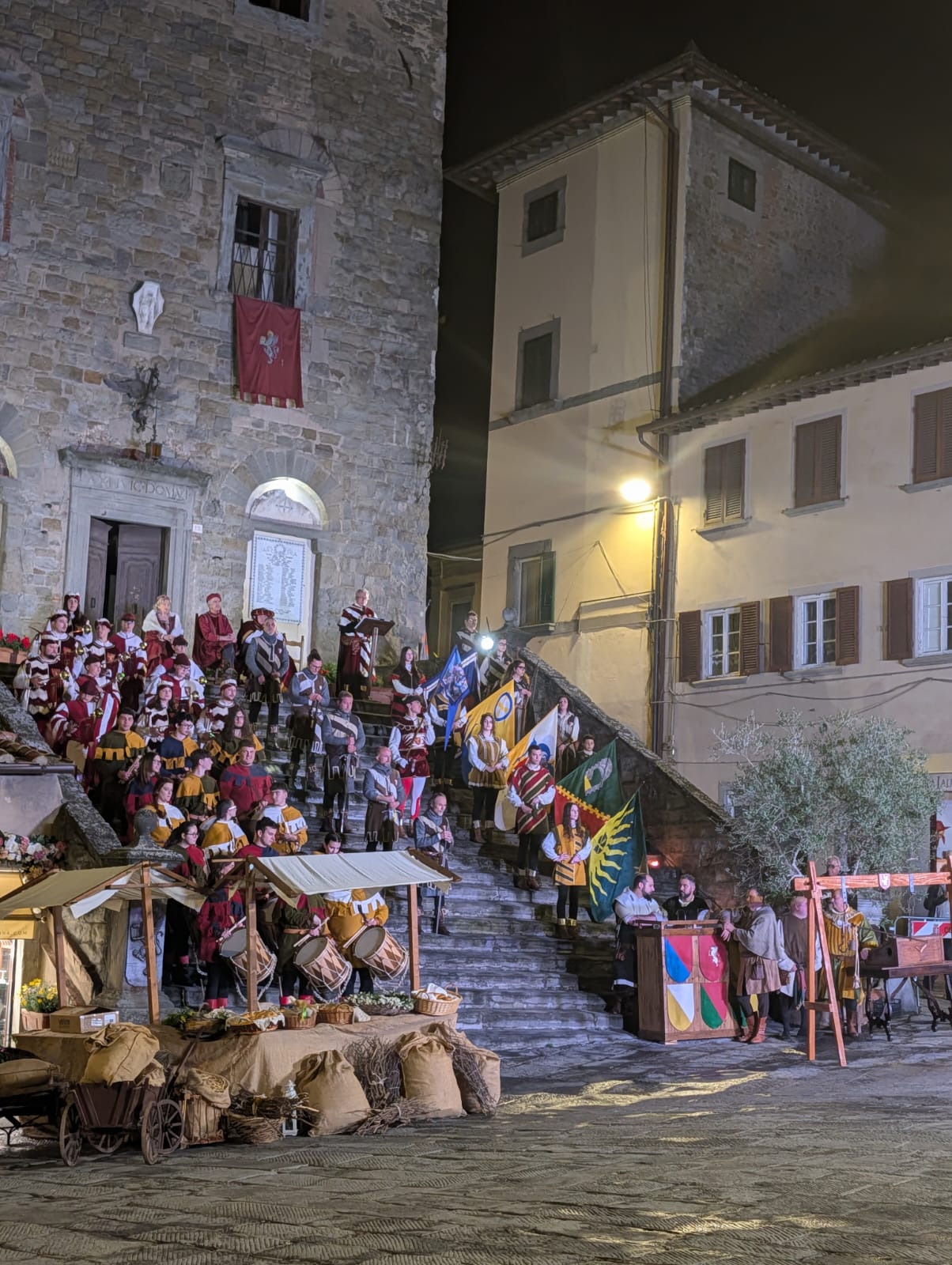
Although inspired by medieval customs, the Archidado in its current form was revived in 1994, when the town’s districts (called quintieri) began competing in a structured historical reenactment. Today, the festival takes place every year in June (typically the second Sunday), preceded by a full “medieval week” of events.
The competition: the crossbow joust
At the heart of the Archidado is a crossbow tournament:
Five districts of Cortona competeEach team fields crossbowmen who shoot at a target from about 20 metersPoints are awarded based on accuracyThe winner receives the symbolic “Verretta d’Oro” (Golden Arrow)
This contest reflects medieval martial traditions and recreates the spirit of historical games of skill.
The spectacle and atmosphere
Beyond the competition, the Archidado is a full immersive experience:
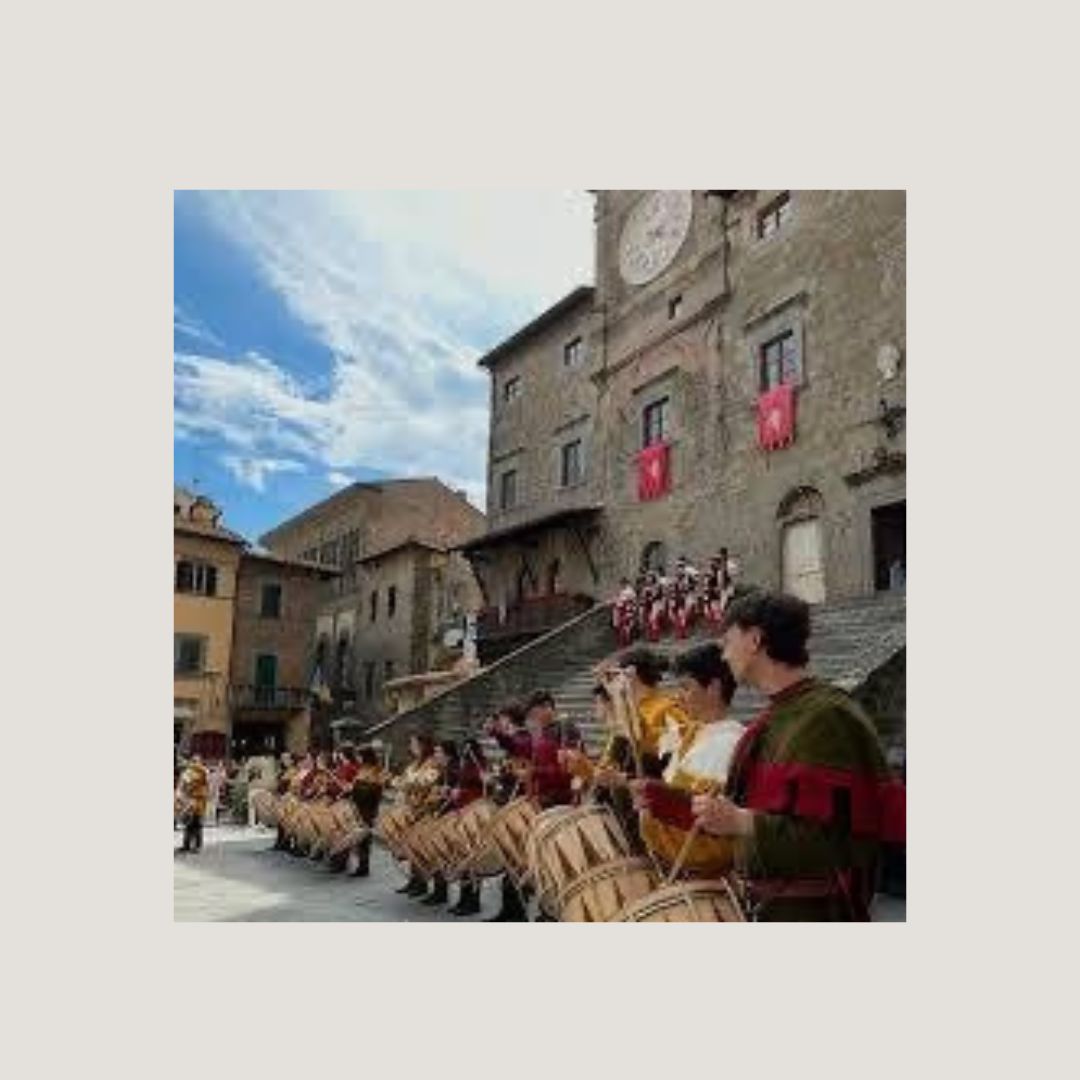
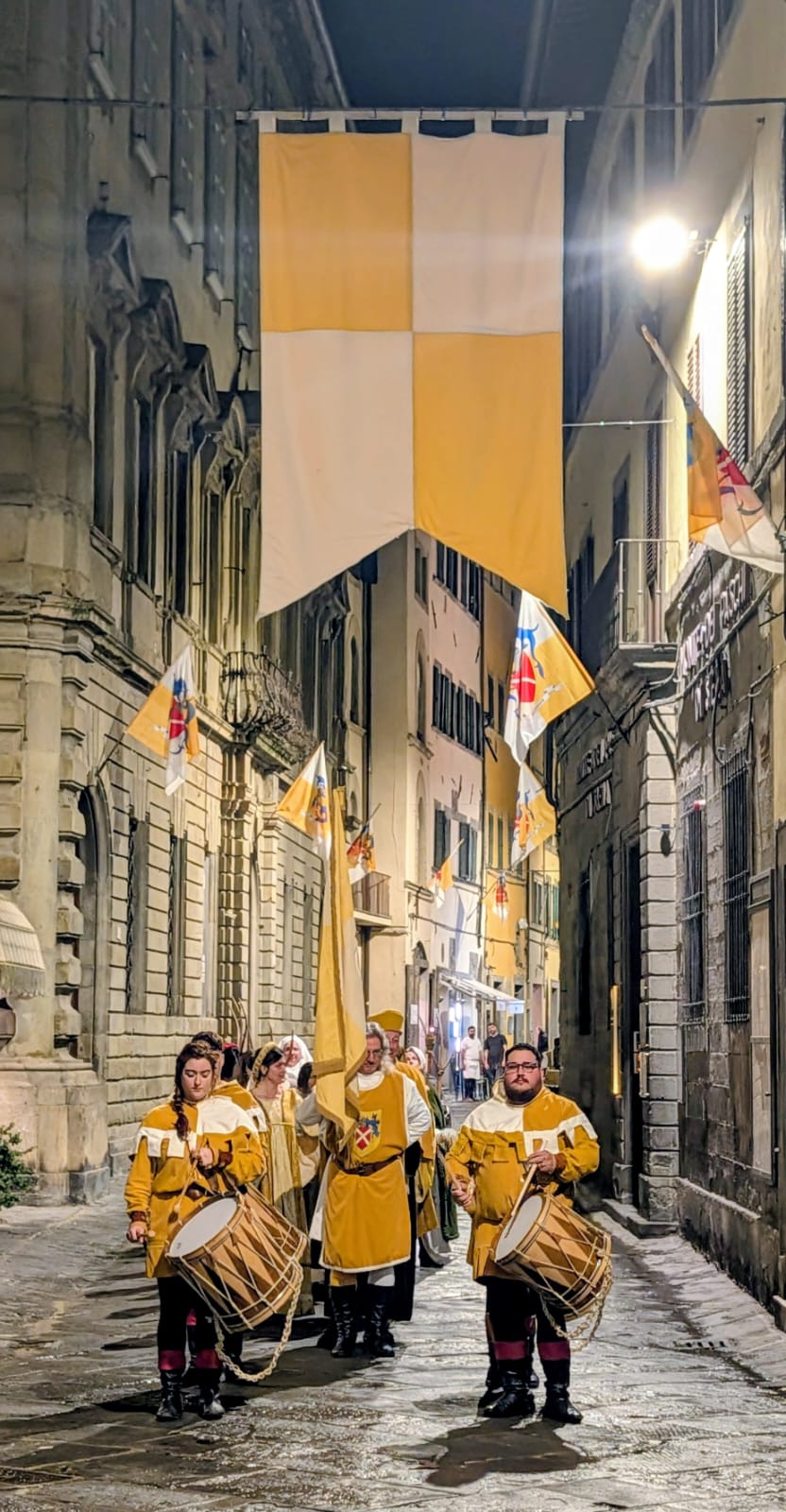
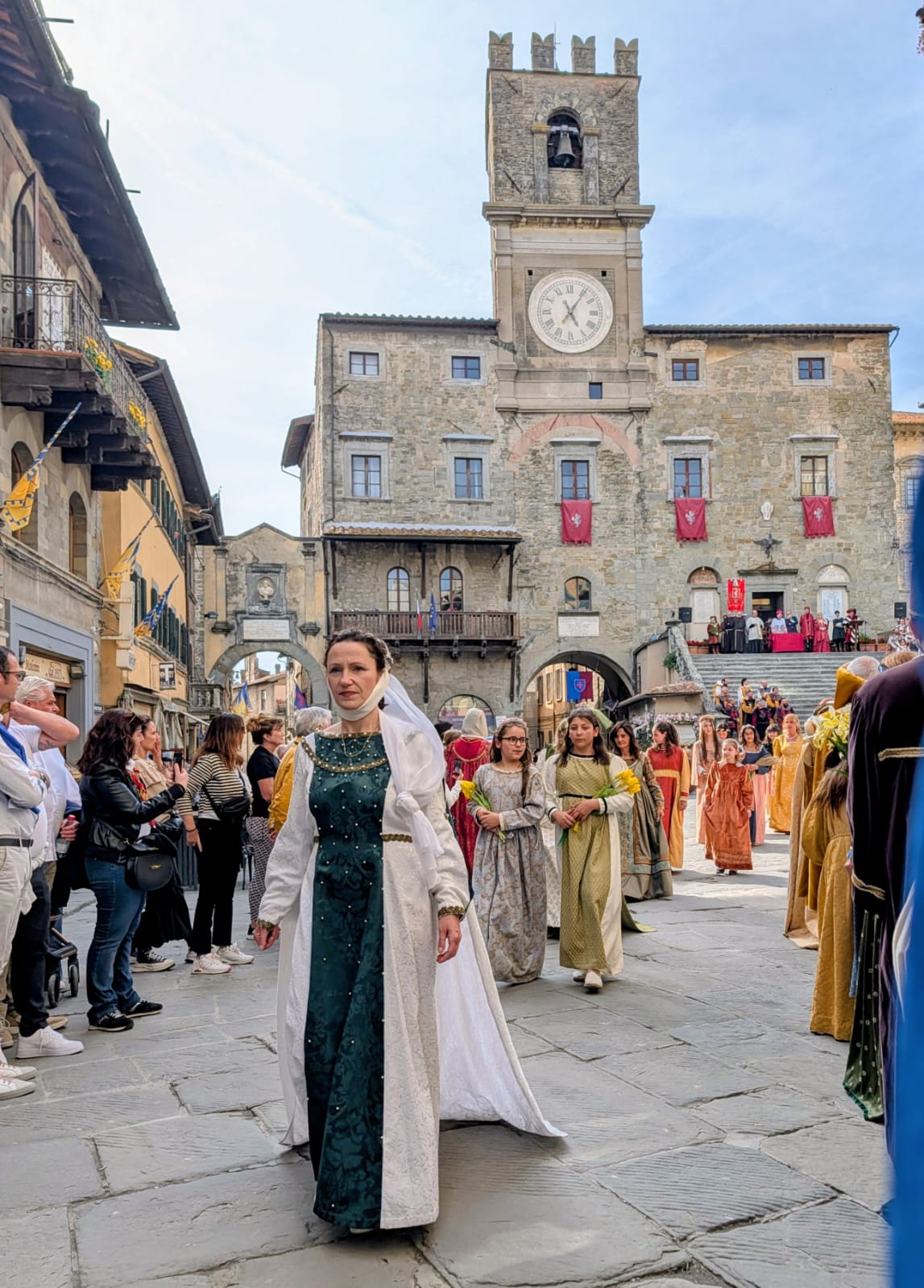
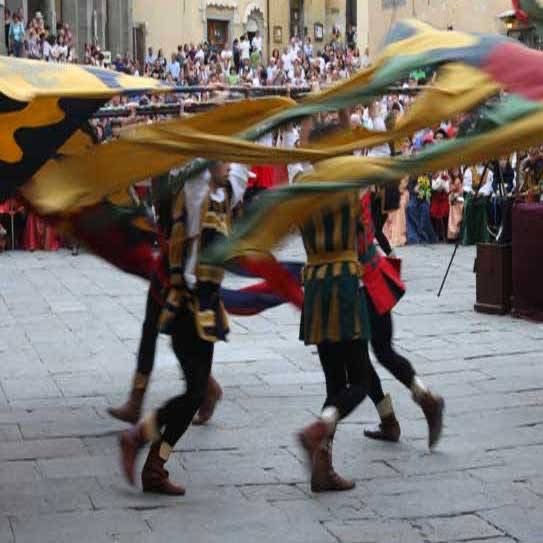
Historical parades with hundreds of participants in period costumeFlag-throwers, drummers, and musicians performing choreographed displaysMedieval markets and banquetsReenactments of the wedding of Casali and SalimbeniFire shows, falconry, and street performances
The entire historic center is transformed, with decorations, costumes, and activities designed to recreate the atmosphere of a medieval town.
Conclusion
The Archidado of Cortona is a remarkable example of how a historical event can evolve into a vibrant modern festival. By blending documented history with theatrical reenactment, it allows both residents and visitors to experience the sights, sounds, and spirit of medieval Tuscany.