Bomarzo: ‘Thriller in 1547….’
Those who know us well know that we are fascinated by monsters, devils, blood, and other cruelties in art. We feast on paintings of "The Last Judgment" or "The Beheading of John the Baptist." We salivate at medieval depictions of martyrs, such as the pierced Sebastian , the broken Caterina , or the roasted Lorenzo.
This morbid obsession recently brought us to Bomarzo , a small municipality in the province of Viterbo, 90 km south of Cortona, easily accessible via the A1 towards Rome.
First of all, as a literary antipasto : a word about the town itself, which towers on a plateau above the Tiber valley .
A two-story elevator takes you to the small center: It is an authentically preserved hidden gem…
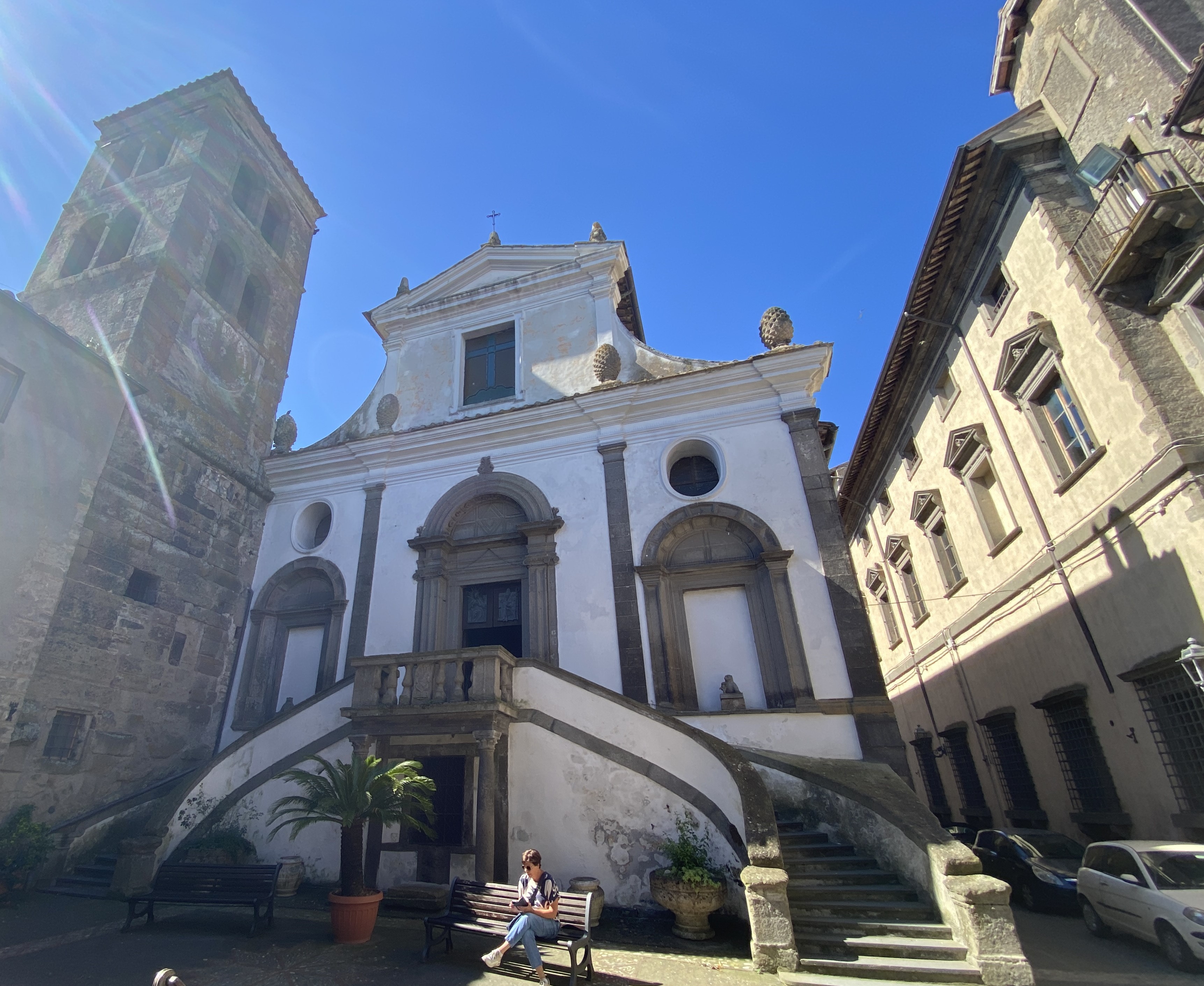
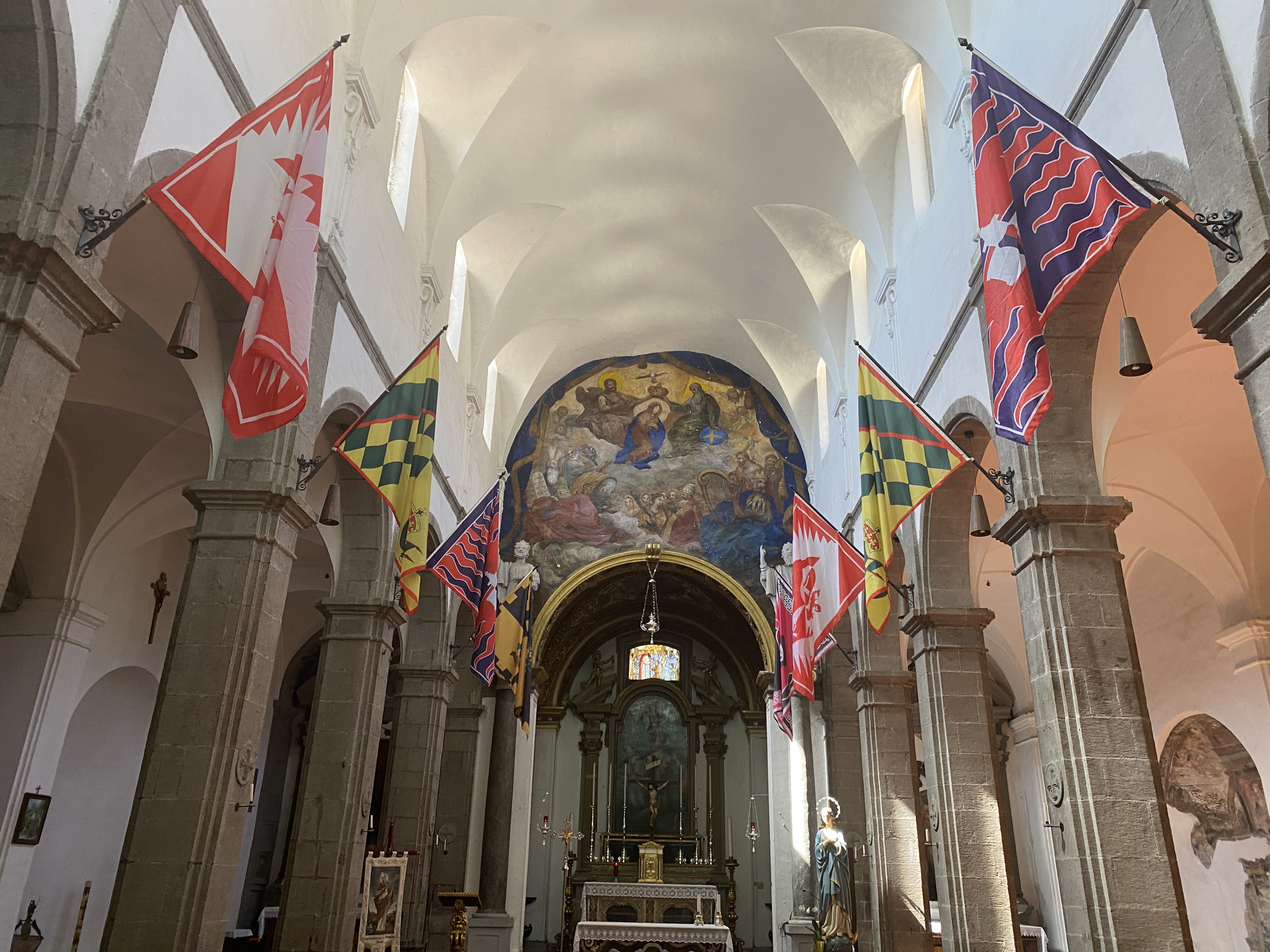
The Duomo of Santa Maria Assunta was built during the Renaissance:
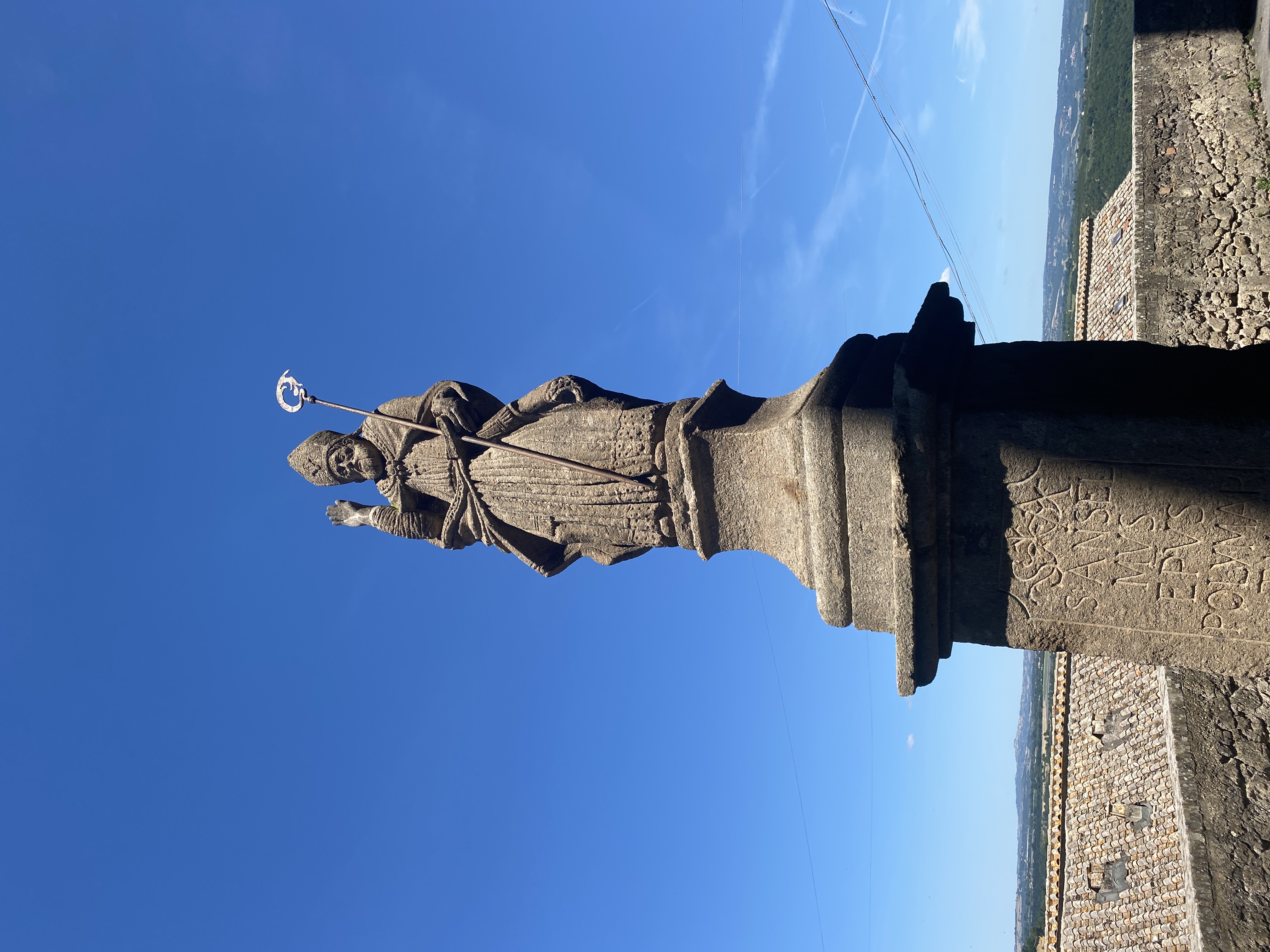
The church is also dedicated to Sant'Alselmo , who watches over the small town a little further on.
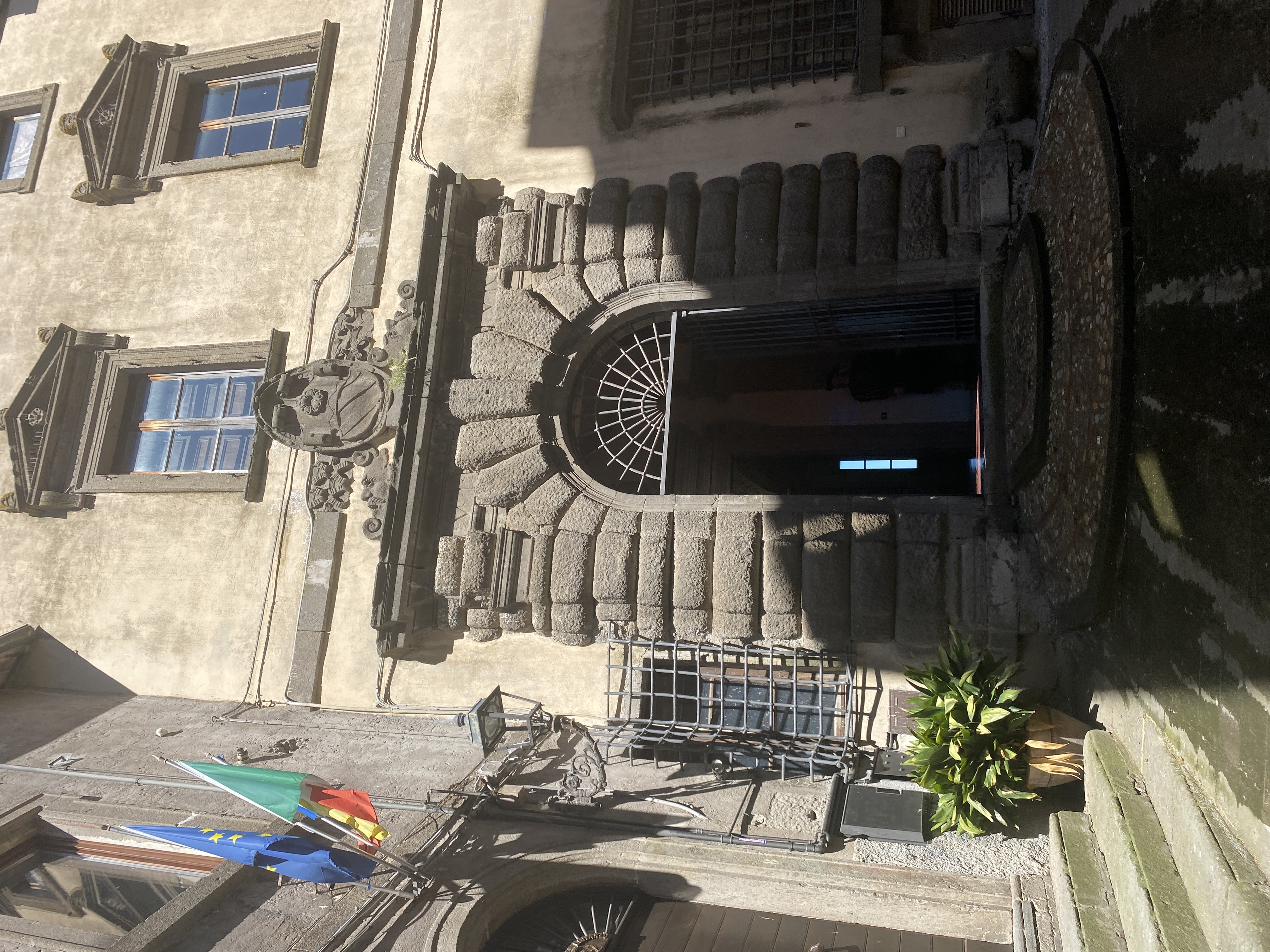
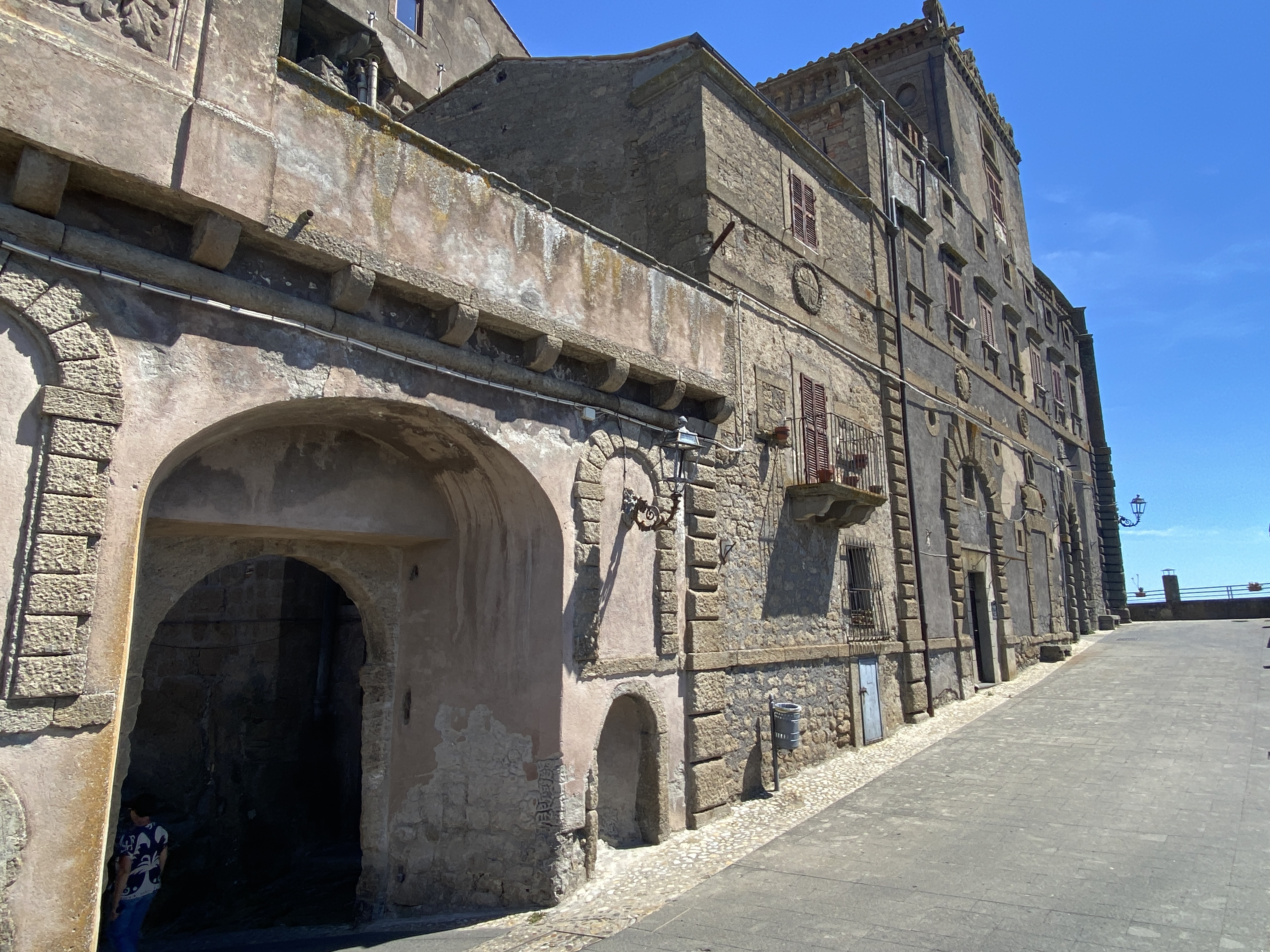
Bomarzo would not be Bomarzo without the Orsini family . They built a palazzo that occupies nearly half of the historic center.
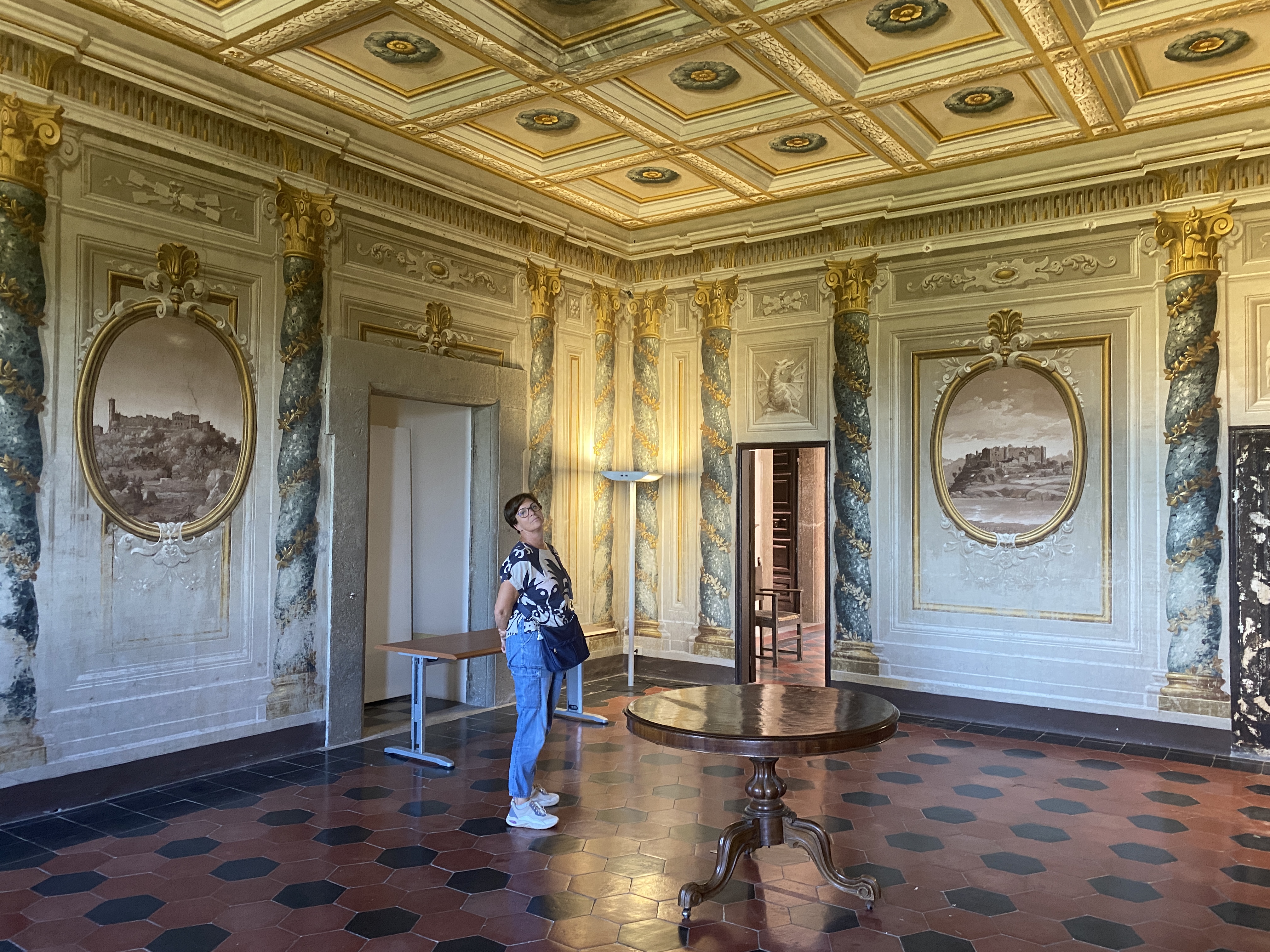
Later, it became the property of other well-known noble families, such as Delle Rovere and Borghese, who had the interior further decorated over the years.
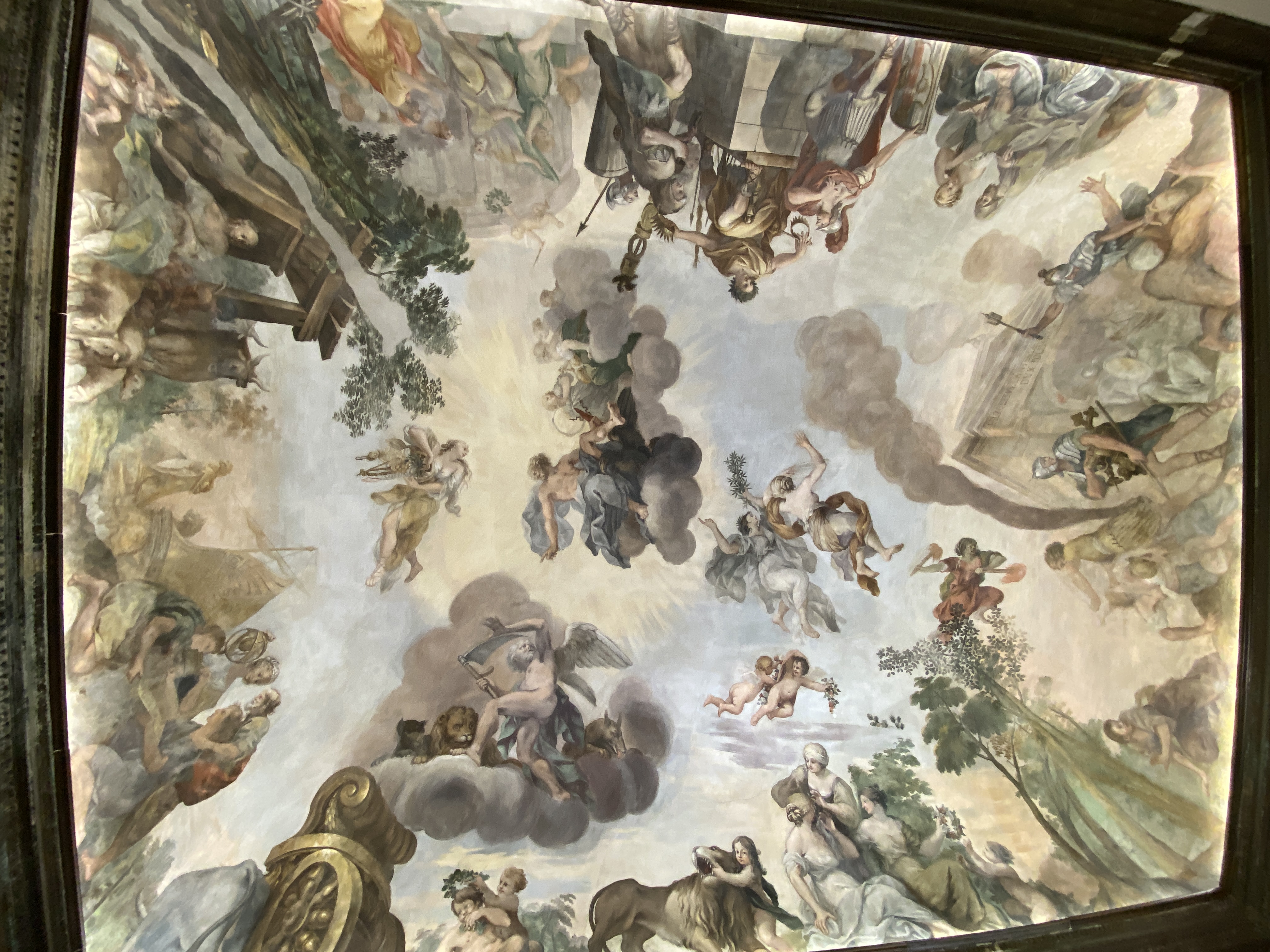
For example, the ballroom on the Piano Nobile features an impressive ceiling painting, an allegory of war and peace:
But… for the main course of this article, we have to be in the palazzo park, just outside the historic center.
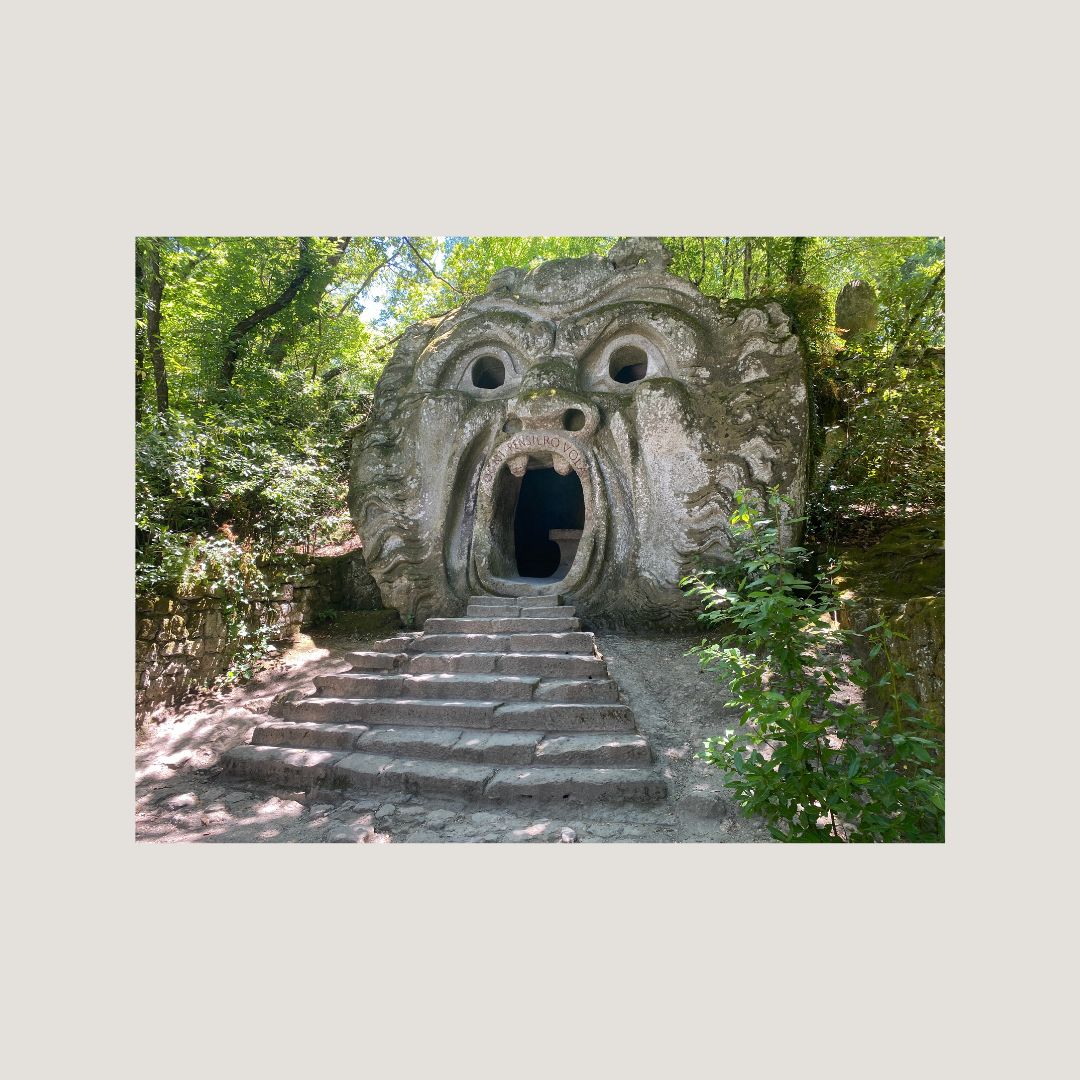
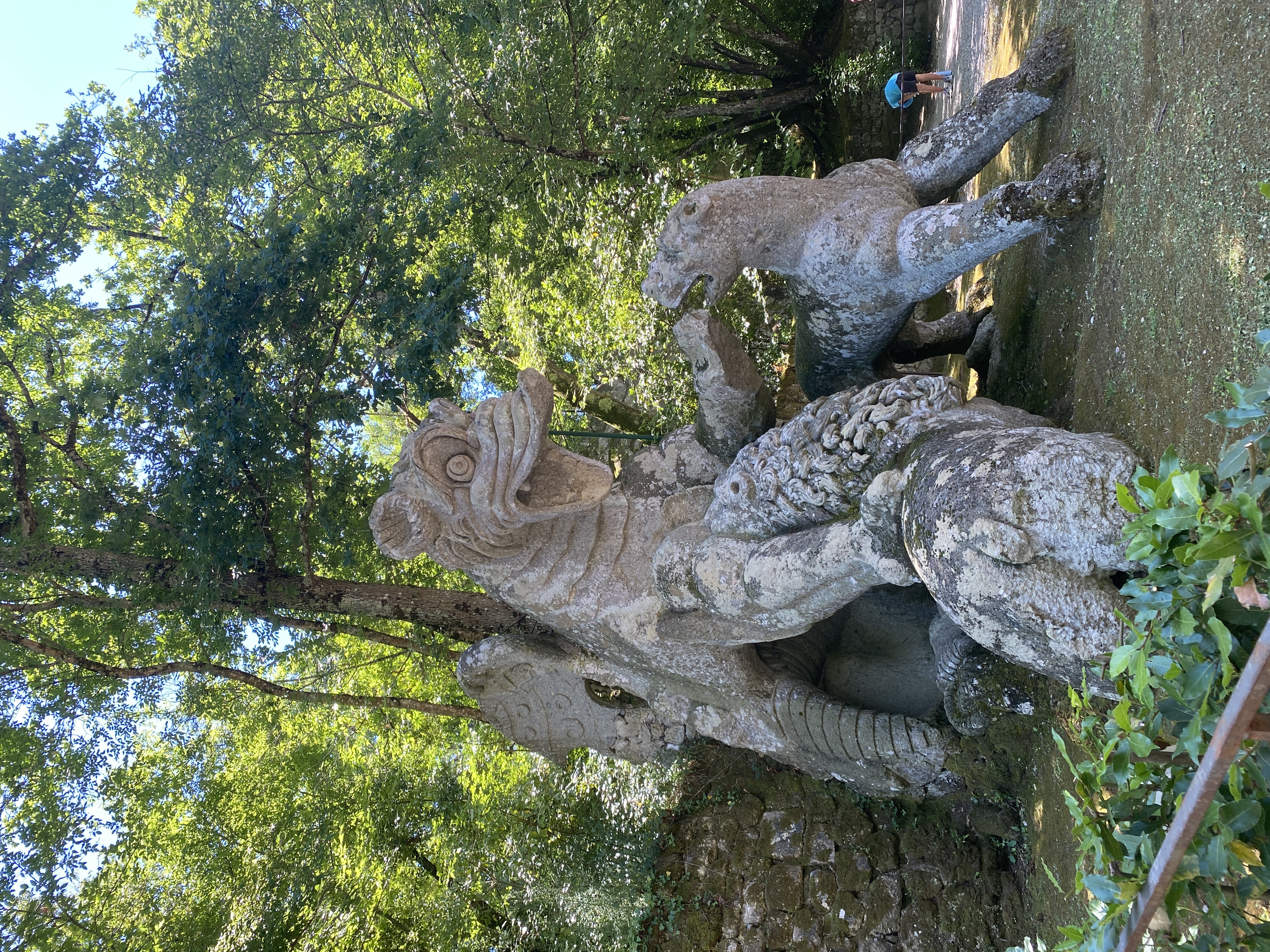
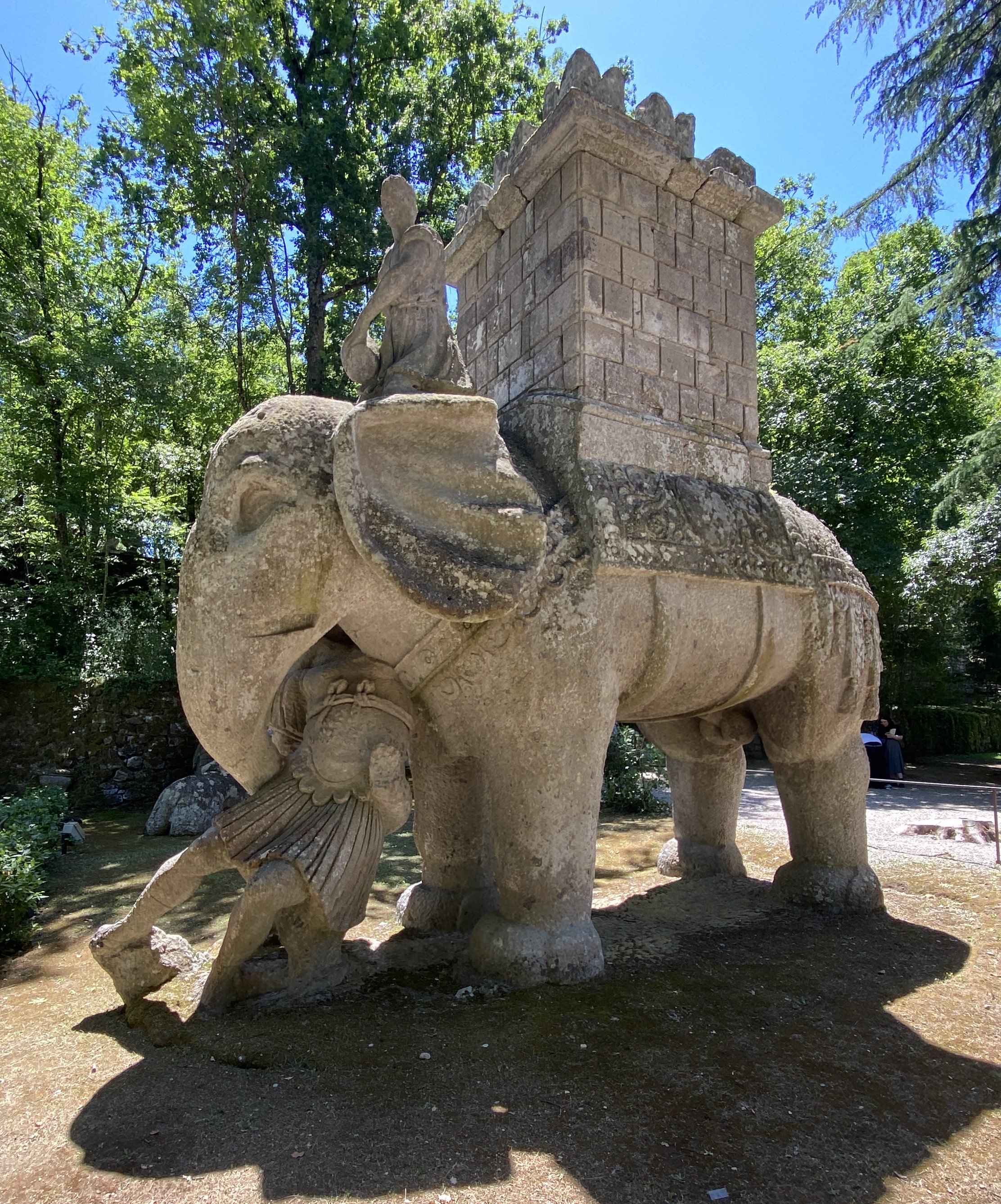
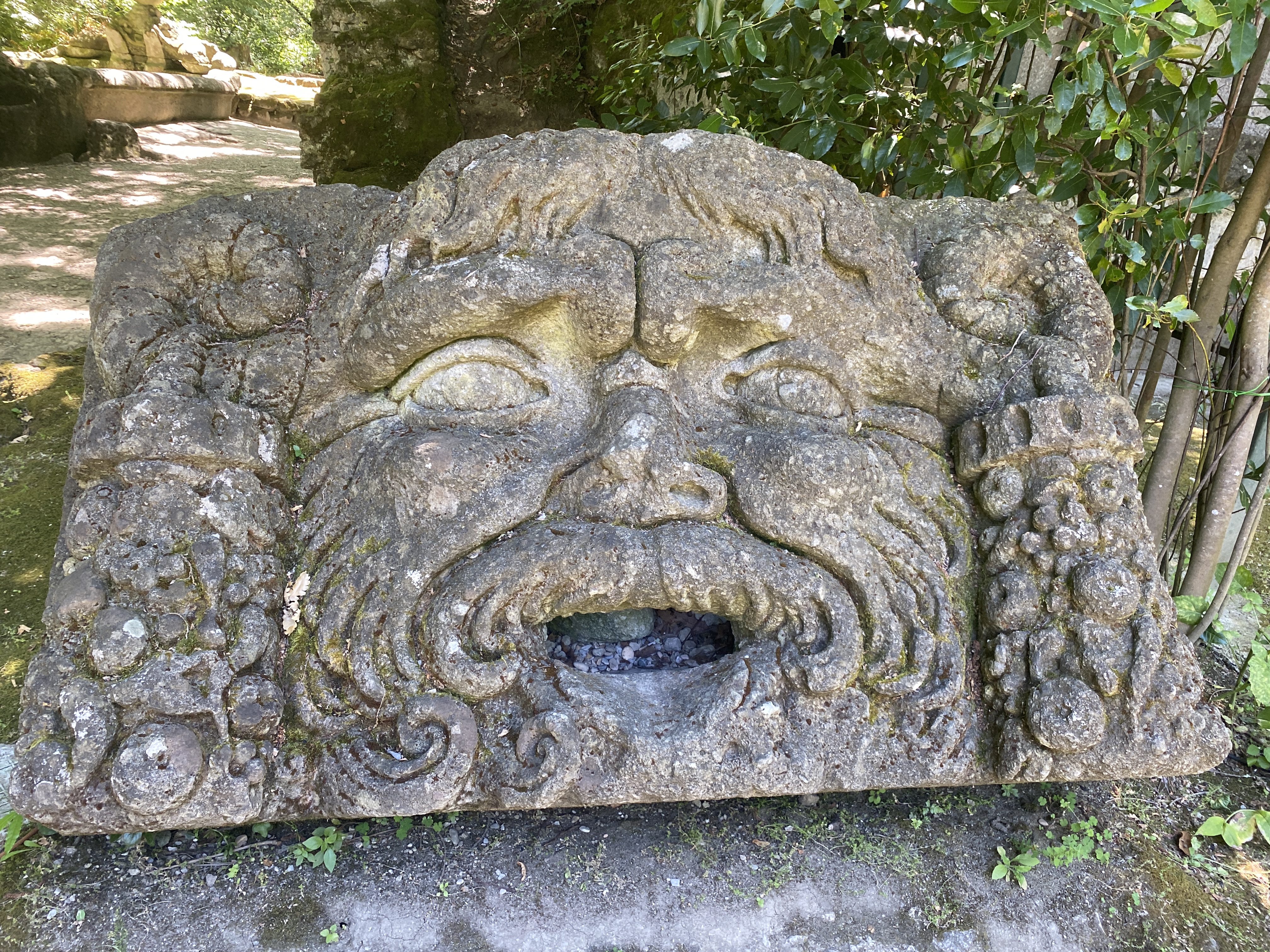
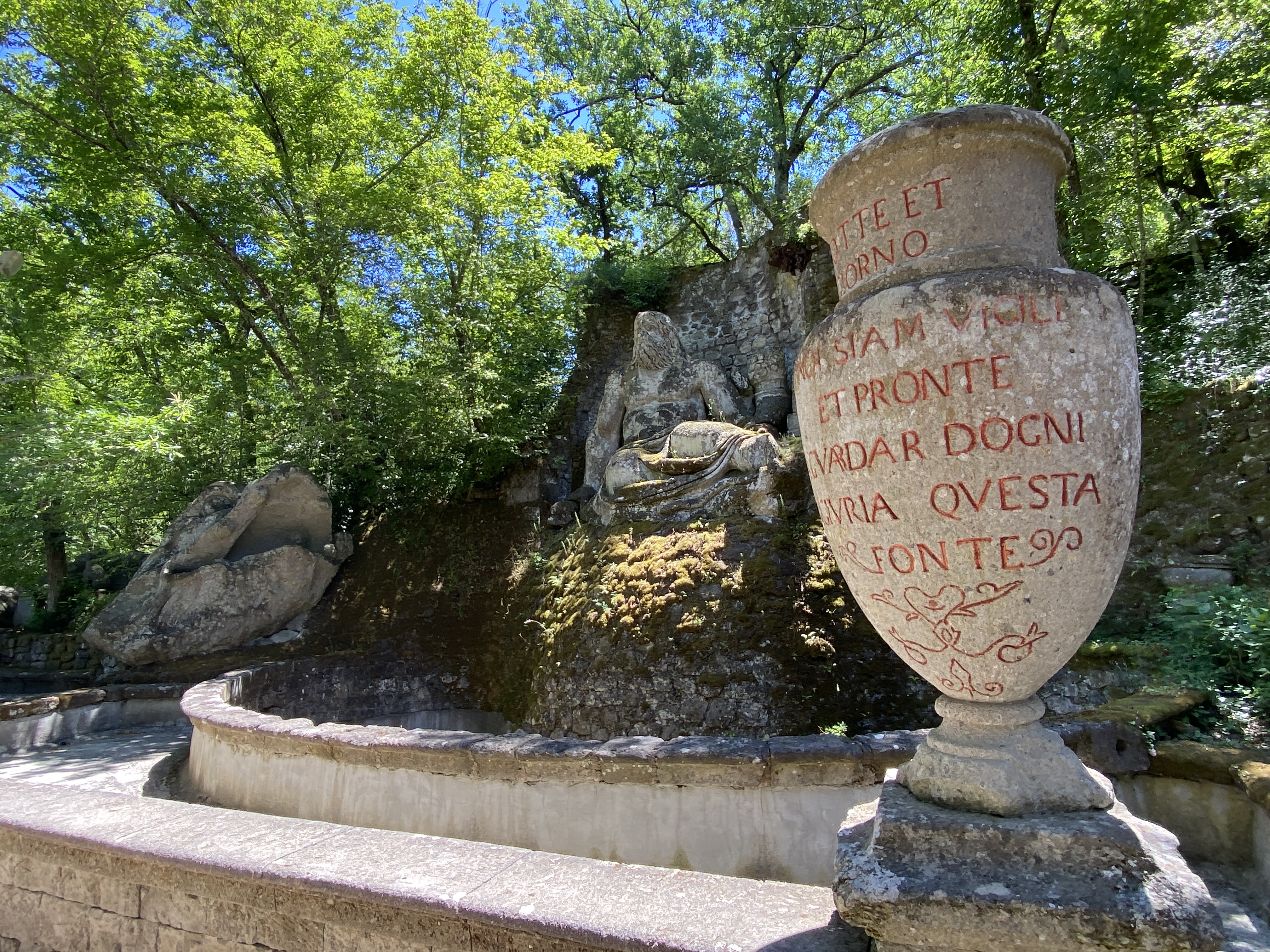
It’s called the Parco dei Mostri di Bomarzo (the park with the monsters of Bomarzo ). This garden contains enormous, bizarre statues of sphinxes, wild animals, and mythological figures from the 16th century. If Michael Jackson had known, he certainly would have used this garden as the setting for his hit “Thriller”.....
The park was designed in 1547 by architect Pirro Ligorio (who also created Villa d'Este in Tivoli) and was commissioned by Prince Pier Francesco Orsini . He was overcome with grief over the death of his wife Giulia Farnese , and had the 'Bosco Sacro ' built as a burial place for her.
Instead of following Christian symbolism, a sculpture garden was created featuring grotesque, fantastic sculptures scattered across a surreal landscape. Prince Orsini wanted to use them to express the unrest in his soul.
Historians and philologists have attempted to explain the labyrinth of symbols, but never arrived at a definitive interpretation. Every turn presents a new riddle…. Perhaps this was the prince's intention?
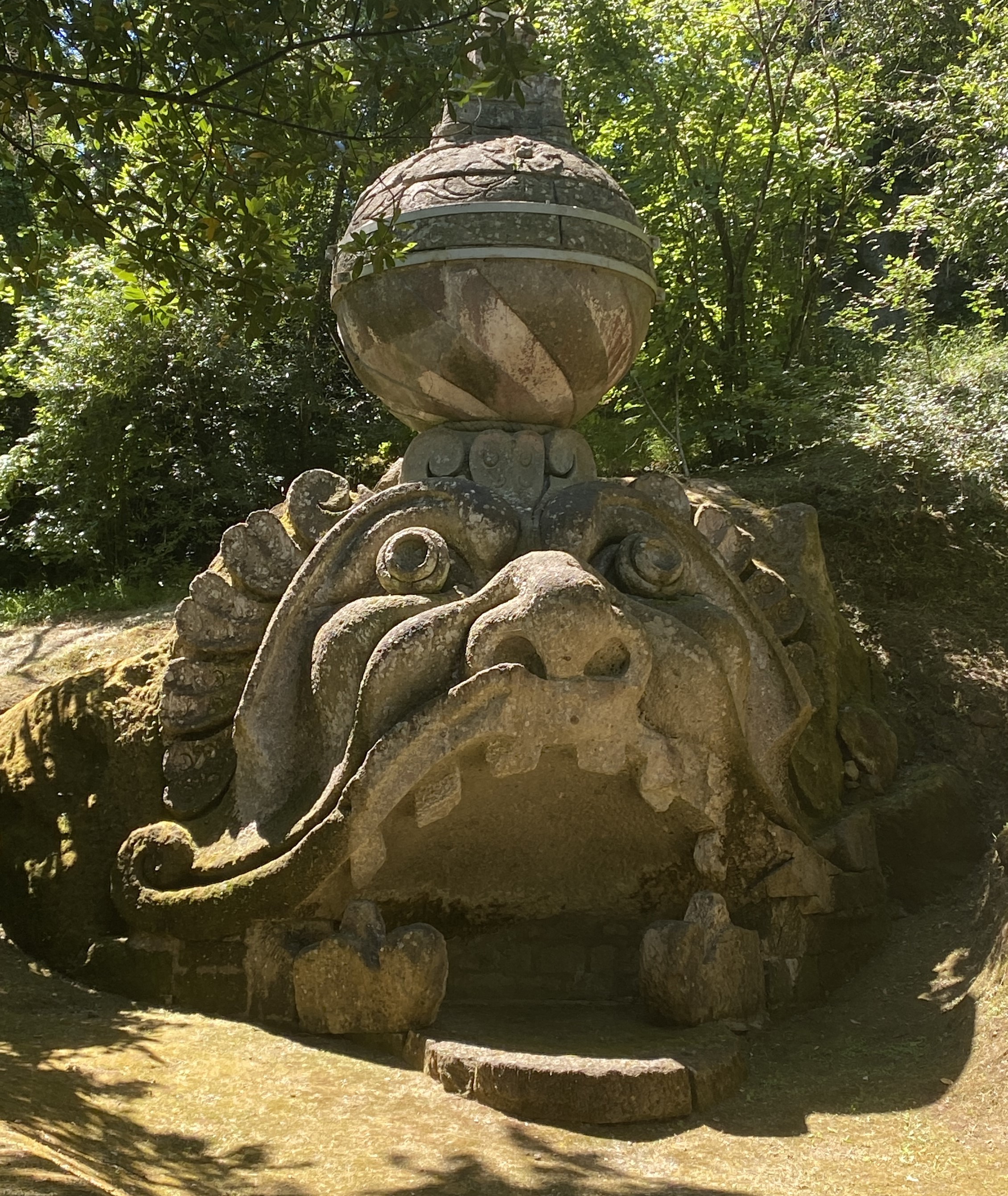
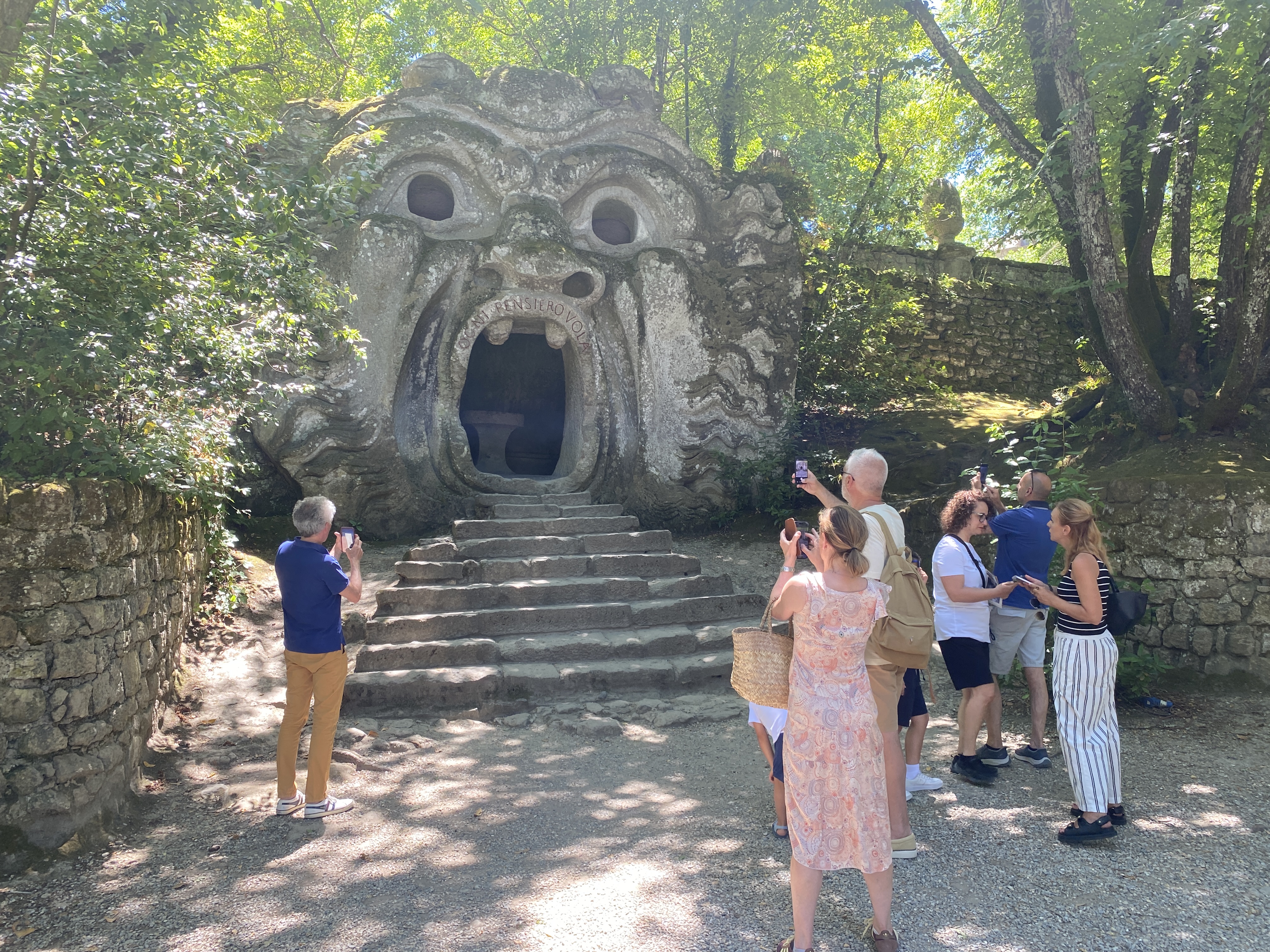
The most iconic image in the park is this gigantic gaping maw… Does it represent the entrance to the underworld?
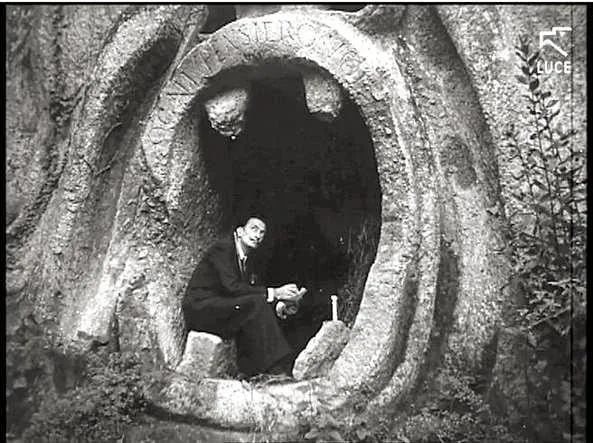
The bizarre sculptures inspired, among others, Salvador Dalí, who visited the park with much fanfare and publicity. He even brought a photo and film crew with him. There are remarkable images of it.
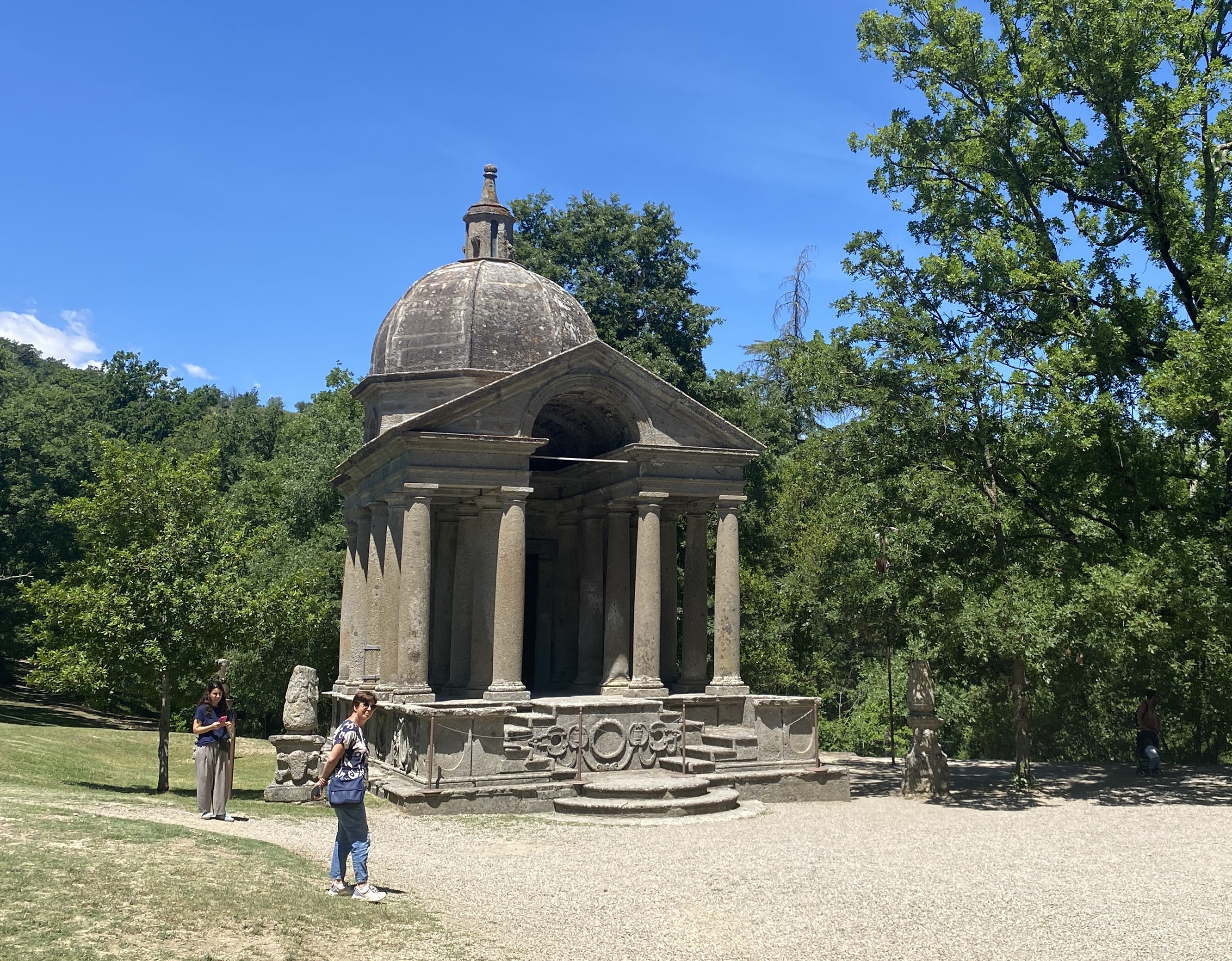
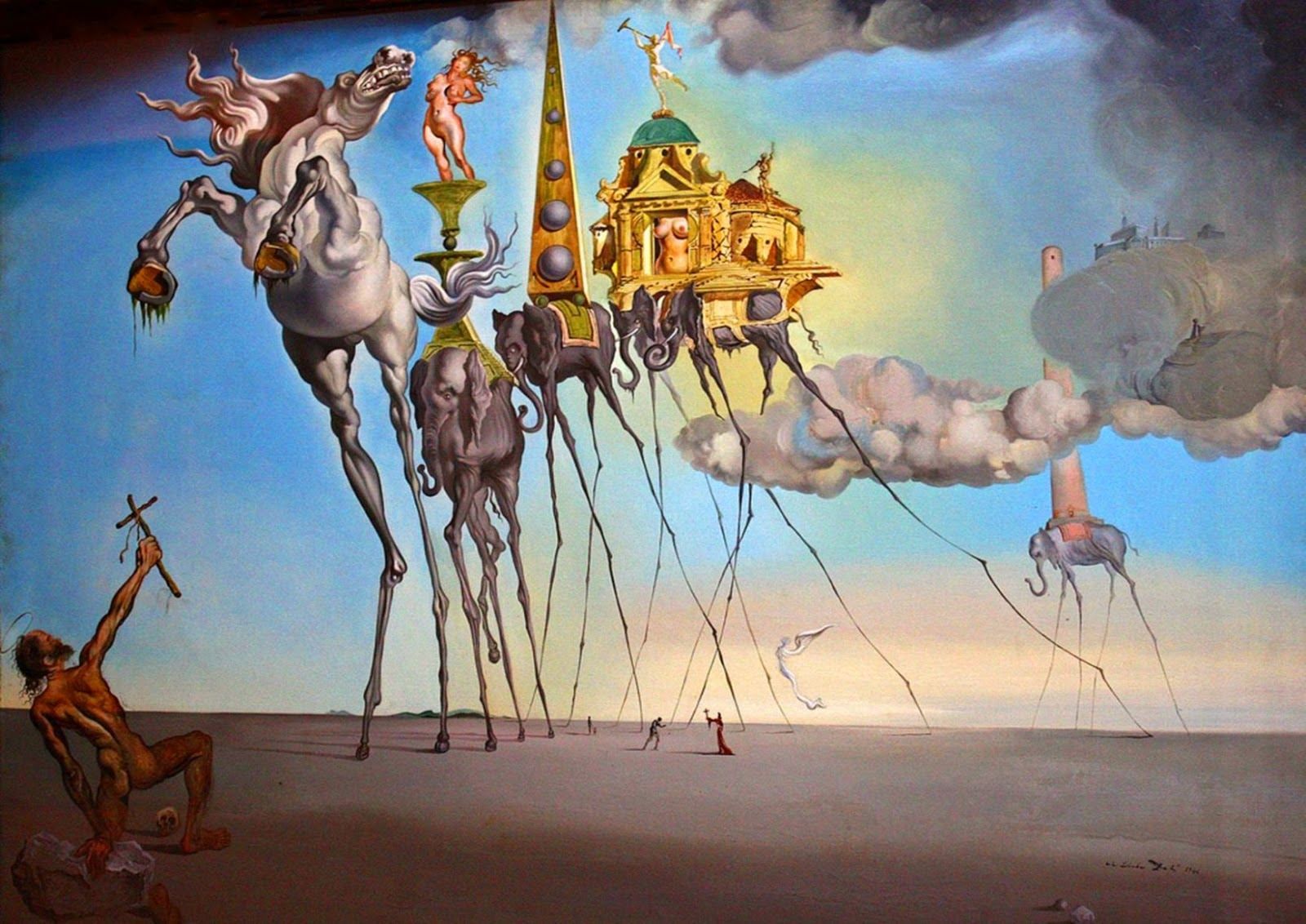
In his painting 'The Temptation of Saint Anthony', Dali is said to have incorporated elements from the sculpture park of Bomarzo : the Elephant, the Small Temple, the Turtle with a female figure blowing a trumpet, and the Pegasus:
A visit to the park sparks the imagination. When we were there, we saw many Italian families with small children, who imagined themselves in an ancient fairytale park. You can spend a pleasant time there on warm days, as it is situated in the shade of large trees.